
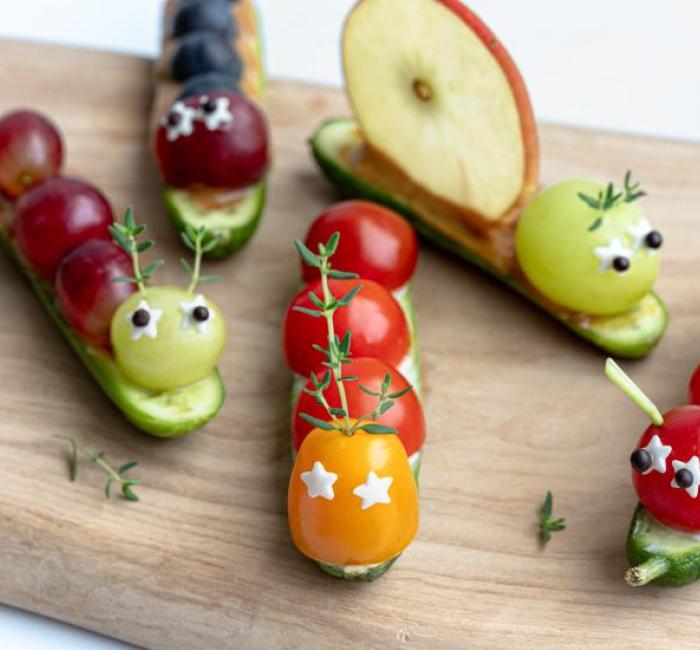
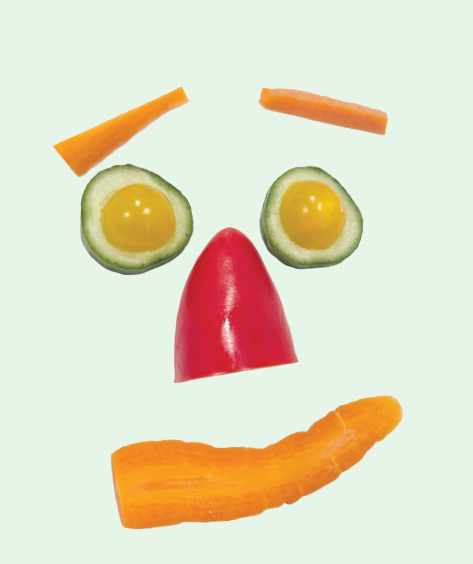

One way to increase your child’s vegetable intake and lower food waste over the long term is to encourage familiarity through play.
Food play builds longer term confidence
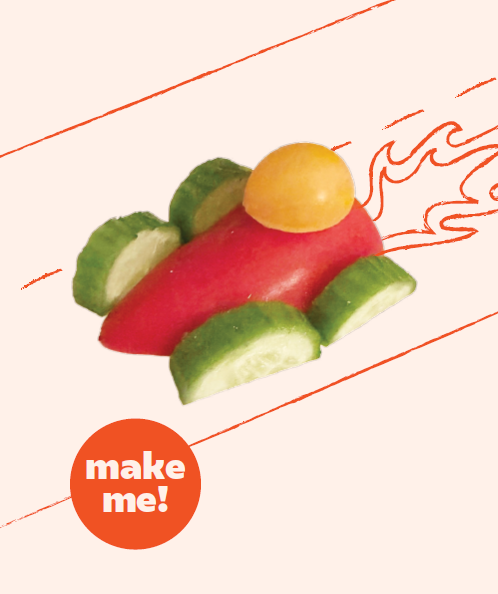
Games, such as making creatures, faces, and other fun things with veggie pieces encourages kids to try new things. Kids are far more influenced by colour, texture, and overall appearance than taste. You might think they won’t eat sweet capsicum but they could eat a racing car!
Get involved and lead the adventure
Creating an atmosphere of fun and asking lots of questions when kids are trying new vegetables helps to lower resistance. Making a game out of it and asking questions such as these takes the focus off taste and increases inquisitiveness:
- “What does it smell like?”,
- “What else is the same colour as this in our house?”,
- “Does it feel rough or smooth on your tongue?”,
- “What animals might like to eat this vegetable?”.
Play can help kids explore, increase familiarity and build up confidence to try new things. Having fun while eating veggies also associates them with feeling good! Positive associations with eating healthy foods goes a long way to creating long-term behaviour change.
If it’s not eaten, cover and store and present again
Repeated exposure does help even if the food isn’t consumed! To reduce food waste in this exploration phase, focus on raw veggies (there’s evidence kids prefer these anyway), keep things separated from other foods like meat, dairy and simply pack away after a few minutes to present again later in the day. Alternatively, have some failsafe recipes such as vegetable soups or this popcorn cauliflower that allows you to cook veggies that don’t get eaten earlier in the day.
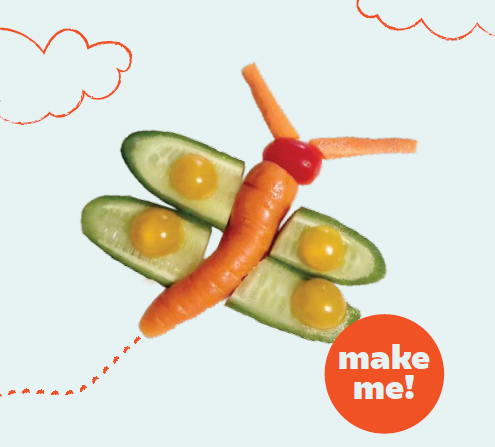
Download and print the "make me" picture prompts here to see the difference play can make. You can use mini veggies to make these, including Flavorite Tiny Caps, Flavorite Tiny Toms, Harvest Moon Snackables carrots and Perfection Fresh Qukes!
https://www.cambridge.org/core/journals/public-health-nutrition/article/sensory-characteristics-of-vegetables-consumed-by-australian-children/B2124A5E14BB9D94EE6A7E63FD68C95D
