Veggie Pops: why the stick works
Give a kid a piece of capsicum as an after-kinder treat and they might just eye it with suspicion. Give them the exact same piece of capsicum, in three different colours, on a stick…and suddenly it's an event.
Working with kids’ natural inclinations for novelty and play is key to getting veggies in where processed snacks now dominate. In fact, this couldn’t be more urgent— kids are now eating fewer veggies than adults, and a lot of that can be changed if we make veggies snacks a focus.
Why the stick works
Kids don't just judge food with their tastebuds. In fact, this can be one of the least important ways kids rate foods. Instead, kids love:
- Novelty: presenting food in new ways resets a kid's expectations. A vegetable they've already decided they dislike becomes something they've never tried before — because, technically, they haven't.
- Autonomy: A stick is a built-in handle. No fork, no help, no adult hovering. That small independence matters; researchers studying picky eating consistently find that a child's sense of control over food changes their willingness to try it.
- Play before taste: A pop gets explored before it gets eaten — turned over, licked, inspected. This opportunity to play before the first bite happens is an opportunity to reshape their resistance.
Making snacks that win
Veggies kebabs
Cut a mixture of carrot, celery, capsicum, even non-bitter lettuce, cherry tomatoes and cucumber into slices. You can even use small cookie cutters to make shapes. Thread them onto a stick and serve it up. You can add cheese or allow them to dip their kebab into a dip of their choice.
The stick alone will bring kids to the veggie party. However, if there’s still resistance, try blending and freezing the ingredients using these ideas because this mutes any bitterness.
Rainbow Veggie Pops
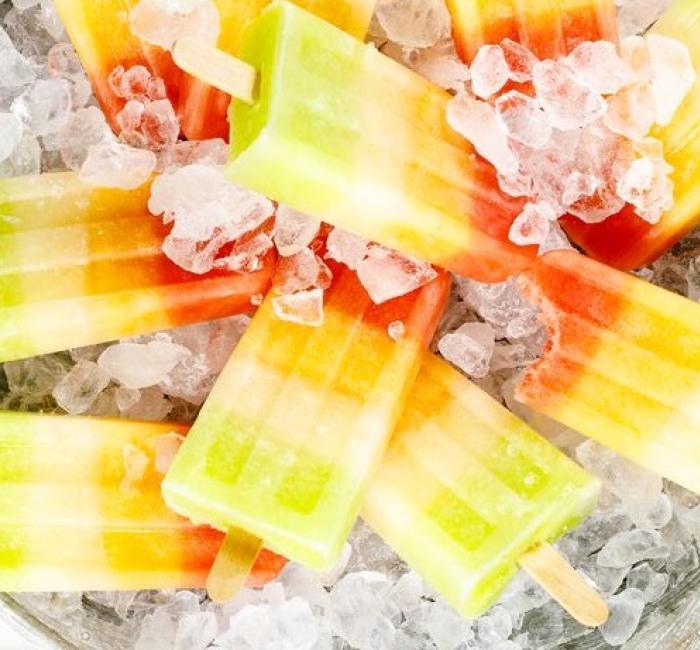
Blend separately: roasted beet + apple, spinach + pear, carrot + orange. Layer each into popsicle moulds, freezing 20 minutes between layers. The result looks like a striped rocket ship — and yes, that matters more than the nutrition profile does, especially to a three-year-old.
Cucumber-Lime Freezer Pops
Blend cucumber, lime juice, a spoon of honey, and a pinch of mint. Freeze in small moulds. Refreshing, mild, and a good entry point for kids wary of "green."
Melon mash-ups
Popsicles like these can be blended with other veggies too. Perhaps a little spinach, carrot juice or anything that isn't too overbearing in taste can be mixed with the magic of melon.
Making it stick
A few things the research and the reality of parenting both agree on:
1. Offer, don't push: As we’ve covered in previous blogs, repeated low-pressure exposure works better than insistence. Somewhere around 8–10 exposures is the rough benchmark before a new food gets accepted — one refusal isn't the final verdict.
2. Bring them into the kitchen: Kids who pour, blend, or pour the mixture into the mould are more invested in trying the result.
3. Name it something ridiculous: "Dragon Potion Pops" outsell "Beetroot Pops" every time.
The frozen food on a stick is the whole strategy: same vegetable, same nutrients, radically different reception. Sometimes the fastest way to a kid's plate isn't a new vegetable-- it's a new shape, associated with something they already love.
REFERENCES
- Green, B.G. & Andrew, G. (2017) — Stimulus-Dependent Effects of Temperature on Bitter Taste in Humans, Chemical Senses
- Systematic review, American Journal of Clinical Nutrition (2019)
- Birch & Marlin (1982); Sullivan & Birch (1990)
- NCBI systematic review (2020)
Posted on
03 August 2026