

The blood sugar rollercoaster
When we eat carbohydrates— think rice, pasta, bread —our bodies break them down into glucose, which floods your bloodstream. The faster that glucose arrives, the sharper the spike in blood sugar, and the more insulin our pancreas has to release in response. That sharp spike-and-crash cycle is what leaves us reaching for a Tim Tam at 3pm. It’s also associated, over time, with increased risk of type 2 diabetes and other metabolic conditions. And this is where vegetables come in as the unsung heroes of stabilising blood sugar.
Studies published in journals including Diabetes Care have found that eating non-starchy vegetables before the carbohydrate portion of a meal significantly reduces that blood sugar spike. One Japanese study found that participants who ate their vegies first had glucose levels up to 30% lower after meals compared to those who ate carbs first.
Why? A few reasons:
- Fibre slows everything down: The dietary fibre in vegetables forms a kind of gel in your gut that slows the absorption of glucose from the carbs eaten afterwards.
- It stimulates helpful hormones: Eating veggies first stimulates the release of GLP-1, a gut hormone that improves insulin sensitivity and signals fullness to the brain.
- The stomach itself becomes a buffer: The veggies that we eat first take up space in our stomach and slow down gastric emptying, meaning carbs trickle into the small intestine more gently.
The result? A gentler blood sugar curve, more sustained energy, and less of that mid-afternoon slump.
Getting the kids on board
Now, if you have children, you may be reading this with a healthy dose of scepticism, but the *first bites first* approach is actually one of the most effective tools we have for improving children’s vegetable intake — and there’s solid reasoning behind it.
Children are hungriest at the start of a meal. That peak hunger is a window of opportunity. If the broccoli, the carrot, and the cucumber sticks arrive before the pasta and the nuggets, kids are far more likely to eat them — simply because they’re genuinely hungry, rather than already three-quarters full.
Research from Cornell University in the US (echoed by UK school nutrition programmes including those piloted under the School Food Plan) found that when vegetables were served as a starter — before the rest of the meal — children ate up to 47% more of them compared to when everything was served at once.
Practical ways to make it work at home:
- Put out a veggie plate while you’re still cooking. Carrot sticks, cherry tomatoes, cucumber, capsicum strips — whatever you’ve got. Hungry kids hovering in the kitchen will graze on them without a second thought.
- Make it feel like a treat: A little dish of hummus or tzatziki alongside raw veggies transforms them from an obligation into something worth dipping.
- Don’t make it a negotiation. “We eat our veggies first” becomes a household norm rather than a nightly battle.
A simple habit with big returns
The beauty of this approach is its simplicity. You don’t need to overhaul your family’s diet, buy expensive superfoods, or spend hours in the kitchen. You just change the sequence.
Veggies first. Then the rest.
For adults, it’s one of the most practical, evidence-backed tweaks you can make for metabolic health. For kids, it gently nudges vegetable consumption upward without turning dinner into a standoff.
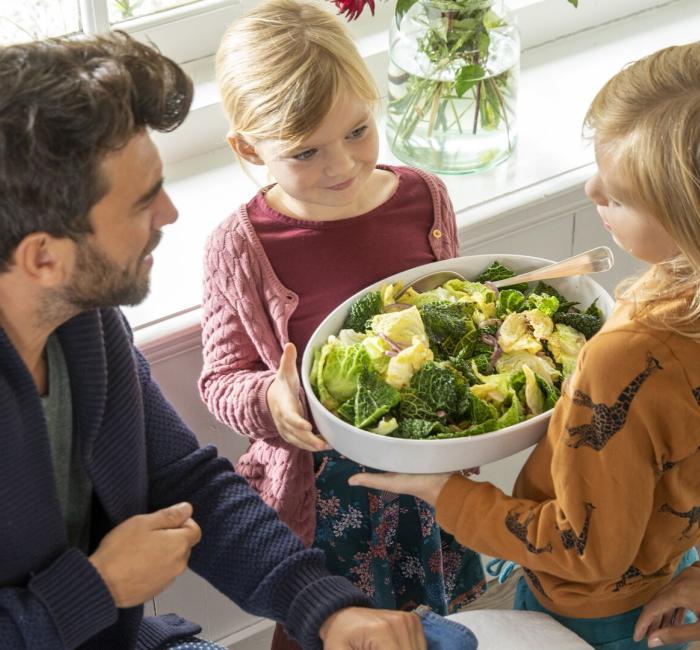
So tonight, before the pasta hits the table, put out a bowl of something green.
*Of course, always consult a healthcare professional or accredited practising dietitian for personalised nutrition advice.*